In this article
Operational reliability often becomes visible at the handoff. A task may be partly complete, a discrepancy may need review, or a teammate may take over at a different point in the day. A useful handoff makes the next action clear without pretending unfinished work is finished.
Read the role through its dependencies
The public Asheville operations-supervisor posting reviewed here includes shipment, replenishment, stock organization, inventory accuracy and escalation. It also notes that responsibility can vary with store size and complexity. Those are role-description facts, not permission to prescribe stockroom procedures. The exact workflow, systems and authority come from the employer.
For preparation, think about dependencies. Someone can only act well on your handoff if they know the current state, what is unusual and who owns the next decision. “Stock done” can hide a remaining exception. “All listed items checked except one mismatch awaiting supervisor review” is more informative, provided it accurately describes the work and follows the approved communication process.
Try the state–exception–next method
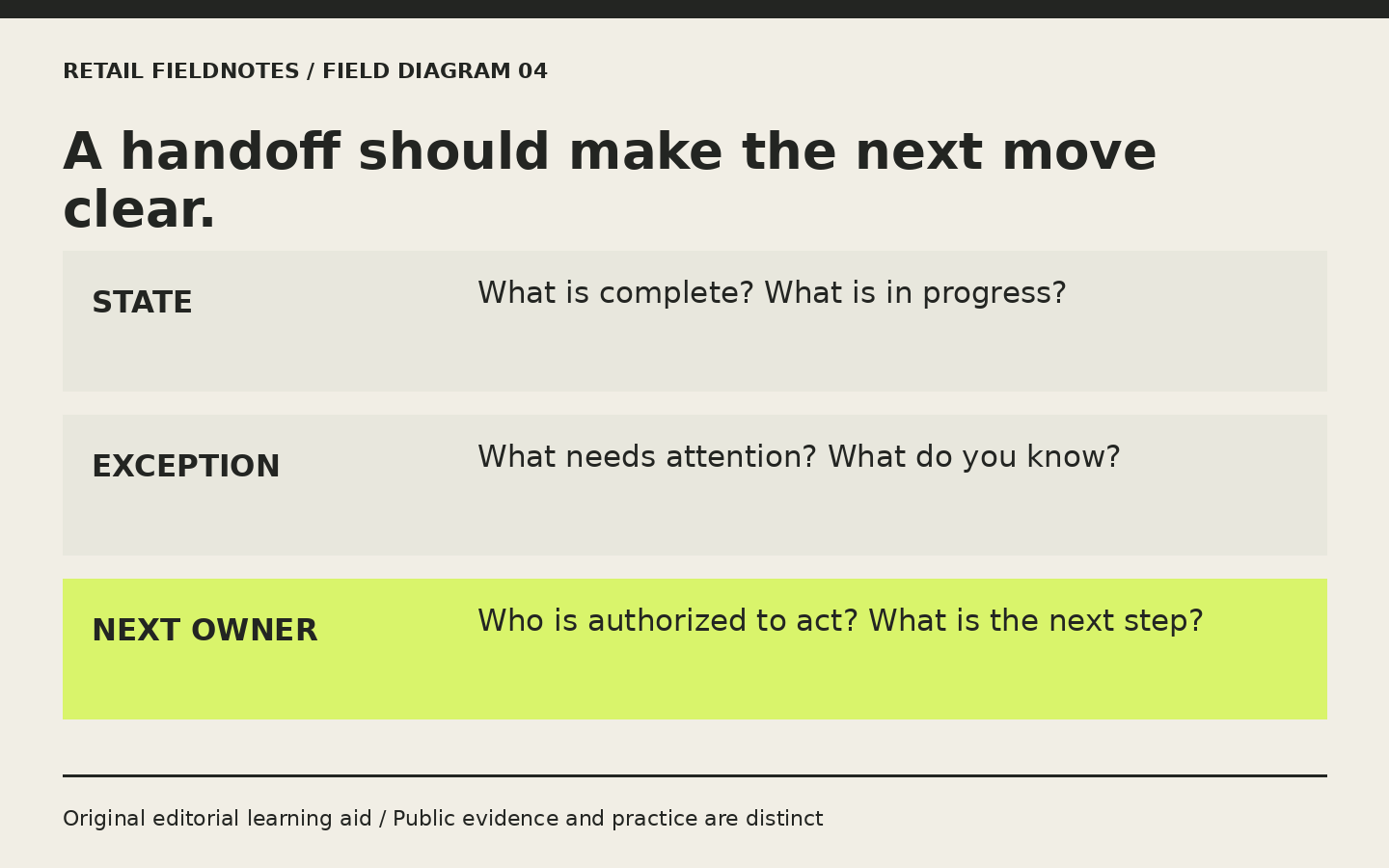
Our original three-part exercise begins with state: what is complete and what is still in progress? Next comes exception: what needs attention and how do you know? Finally, name the next step and its authorized owner. This method is a preparation aid, not an inventory-control policy or a substitute for recording work in the required system.
In a fictional stockroom scene, a delivery check is mostly complete but one label differs from the expected record. The worker does not quietly alter a count to make the numbers agree. They follow the applicable process, identify the discrepancy and hand it to the appropriate person. The lesson is that an unresolved exception should remain visible until someone authorized resolves it.
Make your contribution concrete
When discussing a past example, distinguish observation from decision. “I spotted the mismatch” is different from “I approved an adjustment.” Explain what you were responsible for and where you escalated. If you were following a checklist developed by someone else, say so. Reliability can be demonstrated through careful execution, not only through inventing a new process.
Do not disclose inventory counts, security practices, loss incidents, system screenshots or internal records in an interview example. You can describe the kind of discrepancy and the judgment used without exposing operational details. Similarly, this publication’s exercises should never be treated as instructions for investigating suspected theft or confronting anyone.
Ask the hiring team a better question
Instead of asking only what a normal day looks like, ask which handoffs require the most coordination in this role. A second question might ask how a new hire learns when to escalate an exception. The answers can help you understand work boundaries and training expectations without requesting confidential procedures.
Before the interview, prepare one example where another person could continue effectively because of your communication. Check whether your story identifies a state, an exception if there was one, and a next owner. If all three are missing, add detail from memory rather than adding an invented outcome.
Sources & scope
- Operations Supervisor–Asheville, job 04NJJ — Victoria’s Secret & Co. Public US role-description snapshot: stock execution, readiness, escalation and coaching. Role scope can vary. Originally dated July 9, 2026.
Public sources checked October 12, 2026. Editorial methods and hypothetical scenarios are our own. Check the live posting before acting; this publication cannot confirm an opening, application status, employment terms or internal process.